
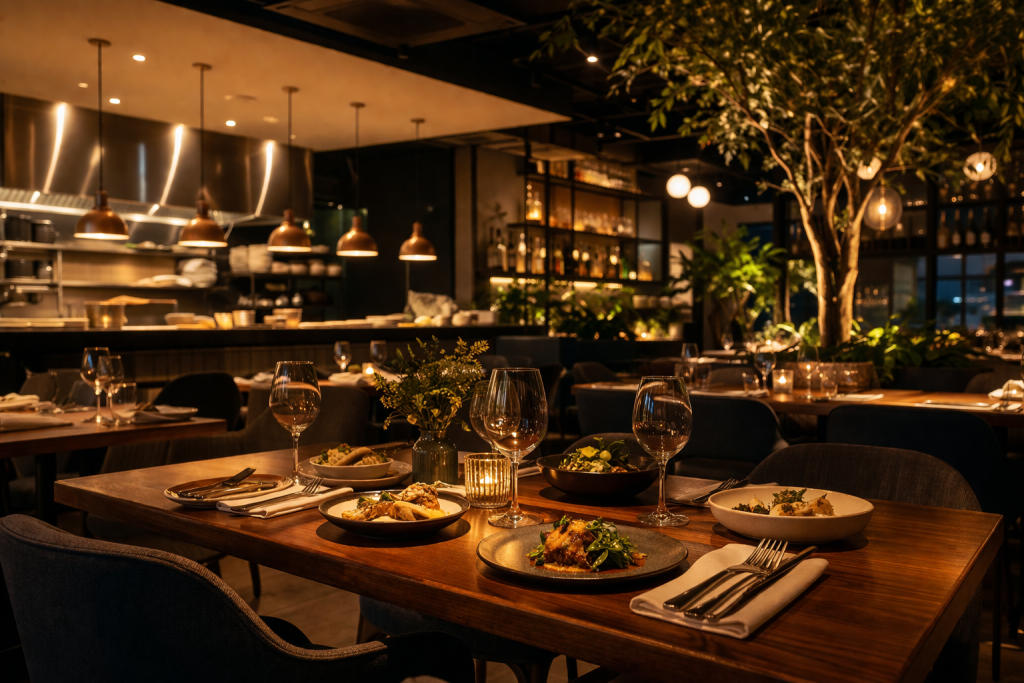
Walking into a restaurant often feels effortless. You sit down, look at a menu, place an order, and shortly after, food arrives at your table. Everything seems smooth and simple. But behind this experience is a highly coordinated system involving planning, timing, teamwork, and constant decision-making.
A restaurant is not just a place where food is cooked. It is a carefully structured environment where creativity meets logistics, and where every small detail contributes to the final dining experience.
The Foundation: Every Restaurant Starts With an Idea
Before a single dish is prepared or a table is set, a restaurant begins with a clear concept. This idea defines everything—from the style of food to the atmosphere, pricing, and even customer expectations.
For example, some restaurants are built around regional culinary traditions. A strong concept can be seen in modern European dining experiences like Santos + Co, which is inspired by Portuguese cuisine and shaped by a relaxed, sharing-style dining approach. This kind of identity influences not just the menu, but also how guests interact with food and each other.
A restaurant concept is important because it acts as a blueprint. Without it, everything would feel disconnected. With it, every decision becomes more focused and intentional.
The Kitchen: A System Built on Precision and Timing
The kitchen is the operational heart of any restaurant. It is where raw ingredients are transformed into finished dishes, but more importantly, it is where timing and coordination matter most.
Orders arrive continuously during service. Chefs must organize tasks based on cooking time, preparation method, and priority. Multiple dishes for different tables often need to be completed at exactly the same moment.
This creates a fast-paced environment where discipline is essential. Ingredients are prepped in advance, stations are assigned specific roles, and communication is constant. Even a small delay can affect the entire flow of service.
Menus are often designed with kitchen efficiency in mind. Dishes may share ingredients or cooking techniques to reduce pressure during busy hours while maintaining consistency and quality.
Front of House: Managing the Customer Experience
While the kitchen prepares food, the front-of-house team ensures that guests have a smooth and enjoyable experience. This includes hosts, servers, and managers who coordinate seating, orders, and service timing.
Their role is not just about taking orders—it is about reading the customer’s needs. Some guests want quick service, while others prefer a slow, relaxed dining experience. Skilled staff adjust their approach accordingly.
Good service is often invisible. When done well, guests simply feel comfortable without noticing the coordination happening behind the scenes.
Menu Design: Guiding Customer Decisions
Menus are carefully structured tools, not just lists of food. Their purpose is to guide customers toward decisions in a simple and enjoyable way.
Restaurants avoid overwhelming guests with too many choices. Instead, they organize dishes into sections and highlight signature items to make selection easier.
In many modern restaurants, small plate concepts are becoming popular. This approach encourages sharing and variety, allowing guests to try multiple flavors in one meal. It also improves pacing in the kitchen and enhances the social aspect of dining.
Atmosphere: A Silent but Powerful Ingredient
Food is only one part of the restaurant experience. Atmosphere plays an equally important role in shaping how guests feel.
Lighting, music, interior design, and table layout all influence mood and comfort. A well-designed space can make a meal feel more relaxed, energetic, or intimate depending on the concept.
For example, entertainment-driven dining venues such as Musica combine food with live performances, creating a dynamic environment where dining becomes part of a larger social experience. In such spaces, timing and service adapt to the rhythm of the event, showing how flexible restaurant systems can be.
Supply Chain: The Hidden Backbone of Restaurants
Before food reaches the kitchen, it goes through a complex supply chain involving farmers, suppliers, and distributors. Freshness, timing, and availability all play a major role in menu planning.
Restaurants often adjust their menus based on seasonal ingredients. This ensures better quality and helps control costs. A dish is only as strong as the ingredients behind it, which is why sourcing is such a critical part of restaurant operations.
Pricing: Balancing Value and Sustainability
Restaurant pricing is not based solely on ingredient cost. It also includes overhead expenses such as rent, staff wages, utilities, equipment, and waste management.
This means that pricing must balance two goals: offering value to customers while ensuring the business remains sustainable. Even small changes in supply costs or customer demand can impact pricing strategy.
Delivery and Takeaway: Expanding the Restaurant System
Modern restaurants are no longer limited to dine-in service. Delivery and takeaway have become essential parts of the business model.
This requires adjustments in food preparation. Dishes must be designed to travel well, maintain temperature, and preserve flavour during transit.
Some restaurants specialize in this model, such as Iford Tandoori, which focuses on takeaway and delivery-friendly dishes. In such systems, speed, packaging, and consistency become just as important as in-house dining experience.
The Human Element: The Core of Every Restaurant
No matter how advanced a system becomes, restaurants ultimately depend on people. Chefs, servers, managers, and support staff all play a role in keeping operations running smoothly.
Communication and teamwork are essential. A single delay or misunderstanding can affect the entire service flow. That is why training, coordination, and experience are so important in this industry.
Conclusion: A Carefully Built System Behind Every Meal
A restaurant may appear simple from the outside, but it is actually a highly coordinated system where every detail matters. From concept creation to kitchen execution, from service to atmosphere, every element works together to create a seamless experience.
Whether it is a concept-driven restaurant like Santos + Co, an entertainment-based venue like Musica, or a takeaway-focused business like Iford Tandoori, the structure remains the same—only the expression changes.
At its core, a restaurant is a living system that never stops adjusting, improving, and responding to the people it serves.