
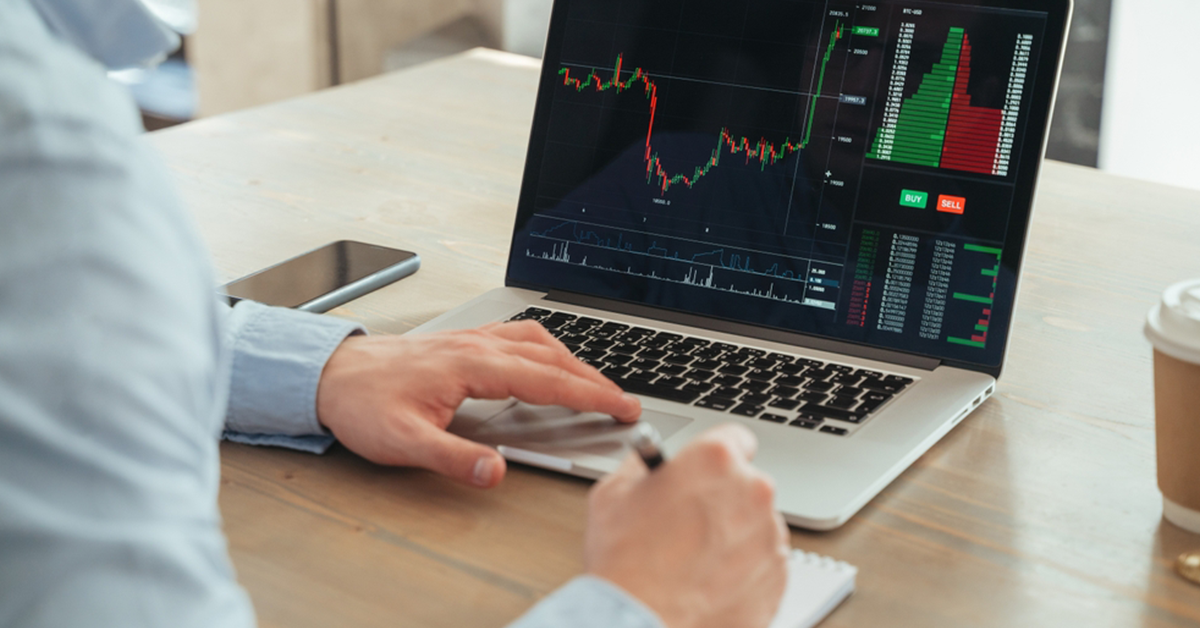
Stepping into the live currency market without tracking your transaction fees is an easy way to watch your hard-earned capital slowly evaporate. While most beginners get fixated on flashy indicators, seasoned pros focus heavily on the bid-ask gap before risking a single dollar. Managing this cost safely means knowing exactly what you are paying on every trade and adjusting your parameters to keep the odds in your favor.
What is the spread, and why is it a big deal for my balance?
Think of the spread as a non-negotiable cover charge at a club, or a service fee you pay when buying foreign cash at a local kiosk. If you buy Euros at a stand and immediately change your mind to trade them back for Dollars, you will walk away with less money than you started with.
In online trading, the spread is the cost of entry. It is the distance between the bid price (the sell rate) and the ask price (the buy rate). Since you must pay the higher ask price when buying and accept the lower bid price when selling, you start every trade in the negative. Partnering with highly competitive, low spread forex brokers is crucial to keeping this starting hurdle as low as possible.
How do I calculate the spread in pips without overcomplicating it?
Finding this number on your own is simple subtraction. On your platform, line up the ask price and the bid price, then subtract the smaller number from the larger one.
For standard pairs like GBP/USD, we measure the gap at the fourth decimal place, which is a “pip.” If the ask is 1.2532 and the bid is 1.2530, your math looks like this:
$$1.2532 – 1.2530 = 0.0002$$
This means you are paying a 2-pip spread. If you are learning how to calculate spread in forex, performing this subtraction manually a few times builds a solid mental safety net. It prevents you from placing trades when the pricing is too wide to justify.
Does the calculation change for JPY or crypto pairs?
Yes, but only because the decimals sit in different spots. Japanese Yen pairs are only quoted to two or three decimal places, meaning the second decimal represents a full pip.
If you are looking at USD/JPY with a bid of 158.10 and an ask of 158.13, subtracting the two numbers leaves you with 0.03, which is a 3-pip spread. Crypto pairs, on the other hand, move much faster and can have wide spreads depending on the token. If you trade digital assets, look for a platform with robust crypto integration and clear, transparent pricing so you do not end up paying massive premiums during sudden market swings.
Why do spreads suddenly widen, and when should I stay out?
Most brokers use floating spreads, which stretch and contract like a rubber band based on how many people are trading a particular pair at that moment. When global banks and institutions are actively trading, liquidity is deep, and spreads are incredibly tight.
However, during major economic news releases, geopolitical events, or the quiet “rollover” hour when the New York market closes and Sydney opens, liquidity instantly disappears. Fearing sudden gaps in price, market makers widen their spreads to protect themselves from heavy losses. Trying to trade during these periods is risky; the cost of entering can double or triple in a fraction of a second.
How do I factor the spread into my risk calculations safely?
Ignoring the spread when placing your stop-loss orders is a major reason why many promising trade setups get stopped out too early. When you buy a currency, your platform closes the trade at the bid price. If you sell, it closes at the ask.
Because standard charts usually only plot the bid price, the higher ask price can hit your buy stop loss even if the line on your chart looks like it never touched it. To prevent this, always add the average spread to your stop-loss buffer. If your technical setup requires a 15-pip stop loss and the current spread is 2 pips, make your actual stop 17 pips. This small adjustment keeps your trade alive during normal market fluctuations.
How do I use my trading platform to monitor this automatically?
You do not need to sit with a calculator in hand while trying to catch a fast setup. Most trading platforms allow you to display the spread directly in your market watch window.
This column is typically displayed in “points” rather than pips, with one point being one-tenth of a pip. If your terminal shows a spread of “15” on EUR/USD, that translates to 1.5 pips. Get into the habit of glancing at this number before you click buy or sell. If the points are flashing red or look significantly higher than the usual average, step away and wait for conditions to normalize.
Summary
Calculating the spread is not just about counting decimals; it is about protecting your bottom line from death by a thousand cuts. Always calculate the bid-ask gap, build the spread directly into your stop-loss orders, and avoid trading during high-risk hours when liquidity dries up. By treating the spread as a standard business cost and tracking it meticulously, you keep your expenses low and ensure your risk management rules do their job.