
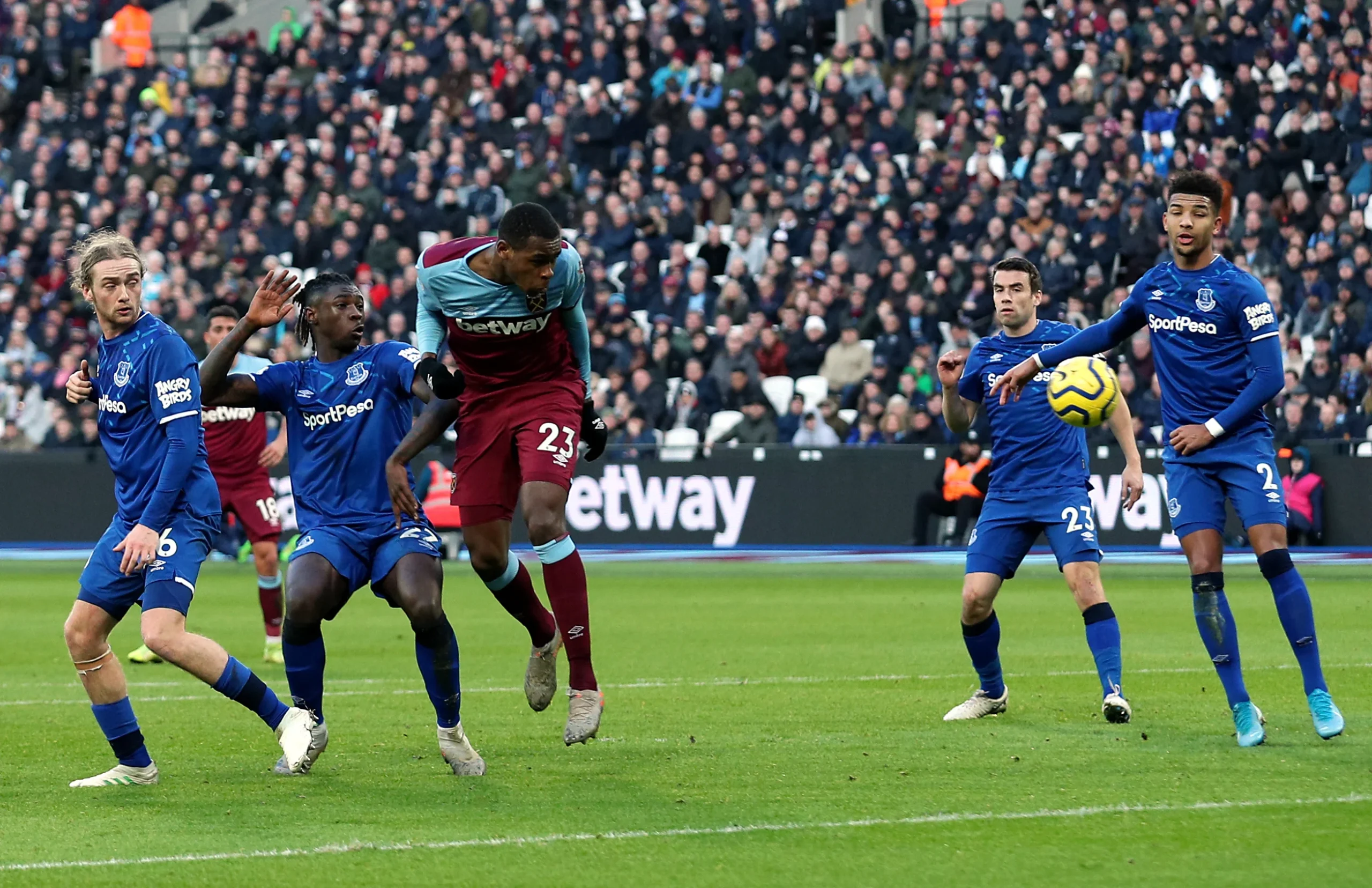
In a league increasingly dominated by tactical pressing and build-up patterns, aerial power is quietly enjoying a resurgence. Headed goals are accounting for a growing share of Premier League scoring, and a handful of clubs have turned that trend into a clear competitive advantage through personnel, crossing structure and set-piece design.
Why Headed Goals Matter More Than They First Appear
Headed goals carry more strategic weight than their raw count suggests because they often emerge from repeatable situations: crosses, corners, wide free-kicks and long throws. League analysis of 2025–26 notes that after just 11 matchweeks there had already been 64 headed goals, putting the league on course for around 221 headers across the season—a record since the stat was first tracked in 2003–04. That equates to roughly 0.58 headed goals per game, higher than any previous campaign, and means 21.3 percent of all Premier League goals so far have been scored with the head, compared with 15.6 percent last season and a previous high of 19.3 percent in 2010–11. Since many of these goals arise from set-pieces, they offer outsized value in tight matches where open-play chances are limited.
Which Teams Currently Stand Out in Headed Goals?
Team goal-distribution tables and headed-goal rankings identify several clubs as leaders in aerial scoring for 2025–26. A league trends piece highlights Arsenal as the top side for headed goals so far, with seven such goals at the time of the analysis, while Tottenham and Chelsea follow closely with six each and Brighton and Manchester United sit on five. A separate “goals by head” table lists Arsenal at the top with 10 headed goals, Tottenham next on nine, then Chelsea on eight, followed by Manchester United and Newcastle with seven apiece in a broader timeframe, underlining that these clubs consistently appear near the summit of aerial scoring charts.
| Team | Headed goals (2025–26 snapshot) | Notable qualities in the air |
| Arsenal | 7–10 headed goals | Multiple scorers across positions, strong set-pieces |
| Tottenham | 6–9 headed goals | Tall forwards and targeted wide delivery |
| Chelsea | 6–8 headed goals | Heavy reliance on set-piece share of goals |
| Brighton | 5 headed goals | Well-drilled routines, good timing of runs |
| Man United | 5–7 headed goals | Centre-backs and midfielders attacking dead balls |
| Newcastle | 7 headed goals in longer sample | Traditional aerial strength, strong crossing volume |
This distribution shows that aerial threat is not confined to “direct” or lower‑table sides; it runs through top-end clubs like Arsenal and Tottenham as well as more transitional teams. Importantly, Arsenal’s headed goals have come from seven different players, which suggests a system-level strength rather than reliance on a single target man.
The Tactical Mechanics Behind Strong Heading Sides
Teams that consistently score with their heads typically combine three elements: repeatable delivery, well-rehearsed movement patterns in the box, and centre-backs or forwards who win aerial duels at high rates. Premier League trend analysis notes that 25 percent of goals after the first five matchdays came from non-penalty set-pieces, the highest share in a decade, and that this was driven both by more long balls and throws and by managers prioritising tall centre-forwards again. Arsenal’s variety of headed scorers reflects a design where full-backs and wide players deliver to multiple zones—near post, central and back-post—while centre-backs, a defensive midfielder and a winger all attack specific channels in choreographed runs.
On the defensive side of those duels, player stats show that Virgil van Dijk leads the league with 105 aerial duels won (31 lost), James Tarkowski is close behind with 91, and Ibrahima Konaté, Sepp van den Berg, and several Everton defenders are also high on the aerial wins list. Team-level aerial duel data confirms that Liverpool, Manchester City, Newcastle and Everton top the table, each winning between about 54.7 and 56.3 percent of their aerial duels overall, which in turn makes it harder for opponents to exploit headers against them even as the league’s reliance on high balls rises.
Comparing Headers From Open Play and Set Pieces
Open-play crossing and dead‑ball attacking place slightly different demands on heading teams. Set-piece rankings for 2025–26 show Chelsea and Manchester United with 37 percent of their total goals coming from set-pieces, Arsenal and Tottenham at 33 percent, and Manchester City and Liverpool lower down at 15 and 10 percent respectively. That distribution implies that Chelsea, United, Spurs and Arsenal lean more heavily on rehearsed dead‑ball routines, many ending in headers from corners or wide free-kicks, while City and Liverpool still gain more of their output from open-play structures. In open play, teams with consistent crossers—such as Wolves’ Hugo Bueno, who leads the league with 13 accurate crosses at a 46.4 percent accuracy rate in limited minutes—sustain aerial threat by feeding forwards repeatedly into good zones.
Why 2025–26 Is on Course for a Record Heading Season
Several structural shifts have combined to push headed goals to potential record levels this season. Opta’s league-wide review notes a drop in passes per game—from over 941 in 2023–24 and 893.4 last season to 873.3 now, still the lowest since 2012–13—alongside more long balls, more long throws, and a further rise in set-piece goals compared to the previous nine campaigns. At the same time, managers have responded to crowded midfields and aggressive pressing by using tall target forwards more frequently, making it easier to attack with first balls and second balls into the box.
This shift has led to the share of headed goals rising into the low‑20 percent range, while models based on the first 11 matchweeks project a final tally of 221 headers for 2025–26 if current rates hold, up from 205 in the record 2010–11 season. For analysts, this means heading strength is not a niche weapon but an increasingly central pillar of how Premier League sides try to squeeze marginal gains, especially as fine set-piece details become a larger determinant of tight matches.
Reading Heading Strength From a Pre-Match Perspective
From a pre‑match analytical point of view, identifying clubs with clear aerial superiority helps predict which matches might see heavier crossing, more headed shots and a greater set-piece focus. Combining team headed-goal rankings with aerial win-rate data paints a picture of where mismatches may lie: Arsenal, Tottenham and Chelsea bring above-average headed scoring, while Liverpool, City, Newcastle and Everton often win more aerial duels than their opponents and can either exploit or resist those same strategies.
Before a match, you can consider:
- Whether the opposition tends to concede a high proportion of goals from headers or set pieces.
- Whether they field shorter full-backs or centre-backs who struggle in the air.
- Weather conditions and pitch quality, which can encourage more aerial play and crossing if the ball moves poorly on the ground.
These factors can tilt expectations toward more aerially driven chance creation in specific fixtures, especially when heading-oriented teams meet defences that already show vulnerability to crosses and dead‑balls.
Integrating Aerial Strength Into a Value-Based Betting Lens
In a value-based betting framework, aerial data is most useful when it points to mispriced probabilities in set-piece and goal-related markets rather than when it is used in isolation. League statistics show that non-penalty set‑pieces now contribute a higher share of goals than at any point in the last decade, with one analysis noting that 25 percent of early-season goals came from these situations, above previous highs of around 23.9 percent and significantly above recent seasons near 20 percent. Teams with a high percentage of goals from dead balls—Chelsea, Manchester United, Tottenham and Arsenal—may therefore offer more consistent aerial scoring threat than their overall goals-per-game numbers alone suggest.
In some analytical circles, observers mention that they plug those set-piece and heading insights into broader digital routines, and this is where ยูฟ่า168 sometimes appears as a sports betting service that lets users align aerial strengths with specific markets—corners, set-piece goal props, or anytime-scorer odds for dominant headers—rather than just match odds. The real edge only emerges when those users convert heading data into concrete rules (for example, upgrading the probability of a headed goal when a high-crossing team faces an opponent with weak aerial defenders), while still checking that odds have not already compressed around that advantage.
Where Heading-Based Evaluations Can Mislead
Despite the growth in headed goals, overemphasising aerial strength can produce misjudgements. Not every match lends itself to sustained crossing or set-piece volume; compact opponents may deliberately avoid fouling in wide areas, manage throw‑ins carefully, and force crossing sides into low‑percentage deliveries under pressure. Sample size is another issue: early-season headed-goal tallies can be skewed by a small run of matches where a few well-taken corners inflate a team’s numbers, masking a longer-term pattern where they create very few high-quality aerial chances.
Moreover, aerial duel success at the player or team level does not always translate into headed goals; van Dijk and Tarkowski win many duels, but often in defensive situations, and their teams may not rely primarily on them as scoring targets. And while the percentage of set-piece goals has risen, that trend is now well-known; markets increasingly factor in the aerial threat of teams like Chelsea or Tottenham, which means blindly backing headed-goal or set-piece-related bets on these sides can become expensive if you do not also evaluate price and opponent adaptation.
In broader gambling settings where people move between structured football analysis and faster games, discussions frequently reference casino online when describing casino environments that bundle table games, slots and sports together. For anyone treating heading data seriously, the main risk is sliding into that high‑frequency, emotion-driven mindset—chasing any match with tall forwards and many crosses as an automatic “header game”—instead of applying aerial stats carefully within a slow, probability-based approach that respects variance, matchups and odds.
Summary
Premier League heading strength is no longer a marginal trait; 2025–26 is tracking toward a record number and share of headed goals, with around 21 percent of all strikes coming in the air and teams like Arsenal, Tottenham, Chelsea, Brighton and Manchester United leading the way in headed scoring. This aerial edge is rooted in system design—crossing volume, set-piece routines and physical profiles—rather than just tall forwards, and it interacts with league-wide shifts toward more direct play and a higher proportion of set-piece goals. When heading stats, aerial duel data and opponent weaknesses align, they offer a clear lens on how a match might unfold; used with attention to context and pricing, they upgrade analysis rather than turning every high cross into an excuse to bet on headers for their own sake.